
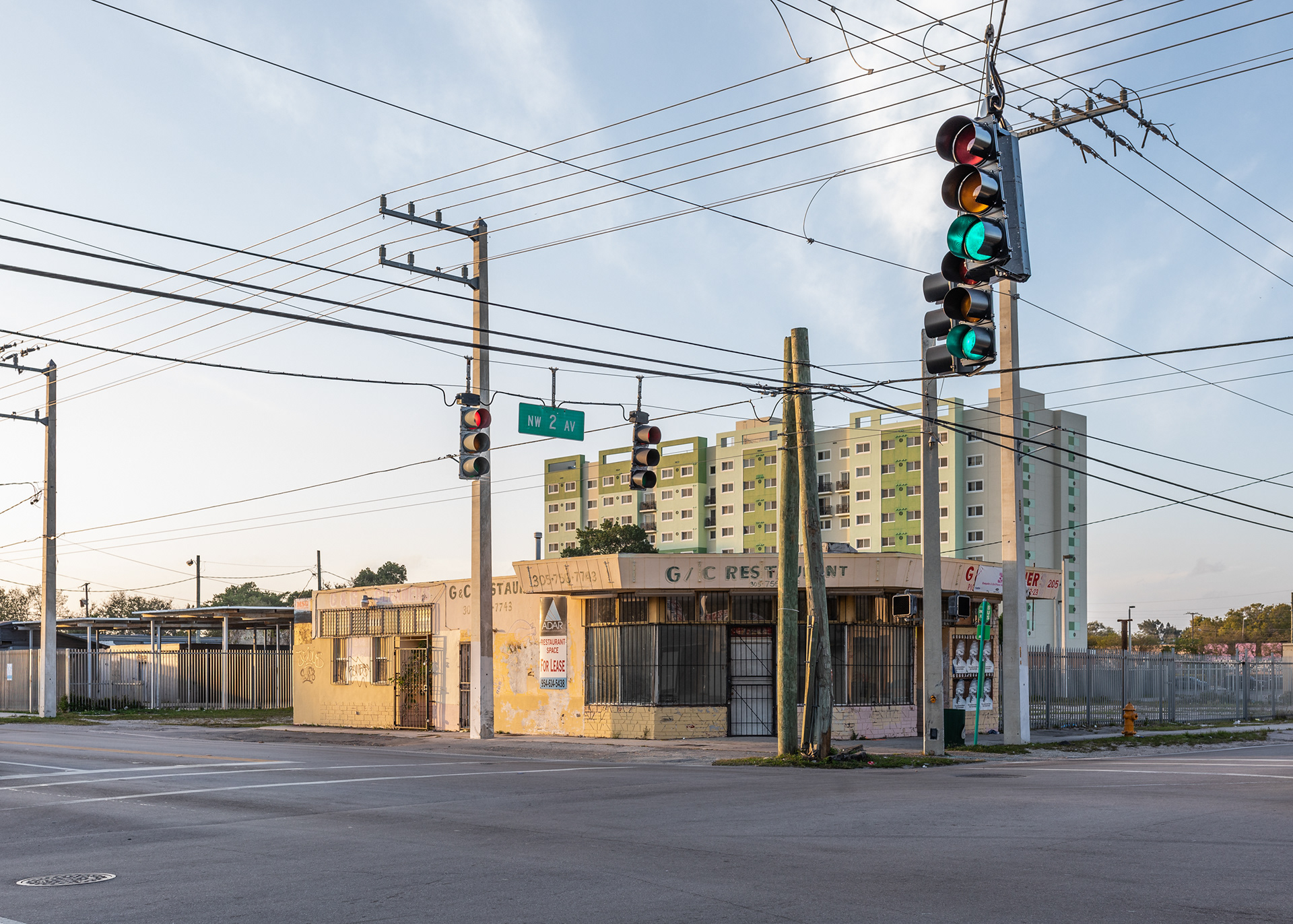
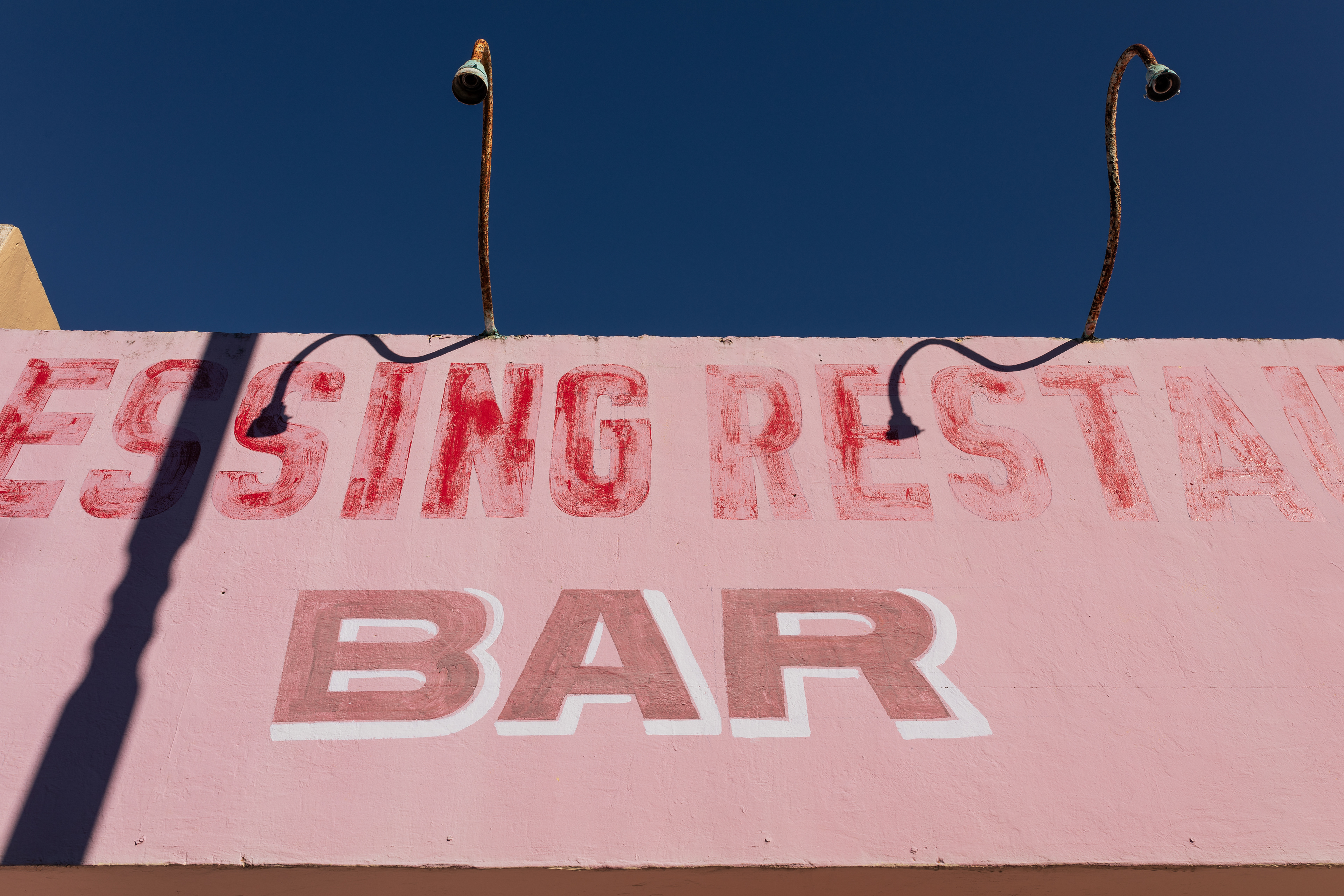
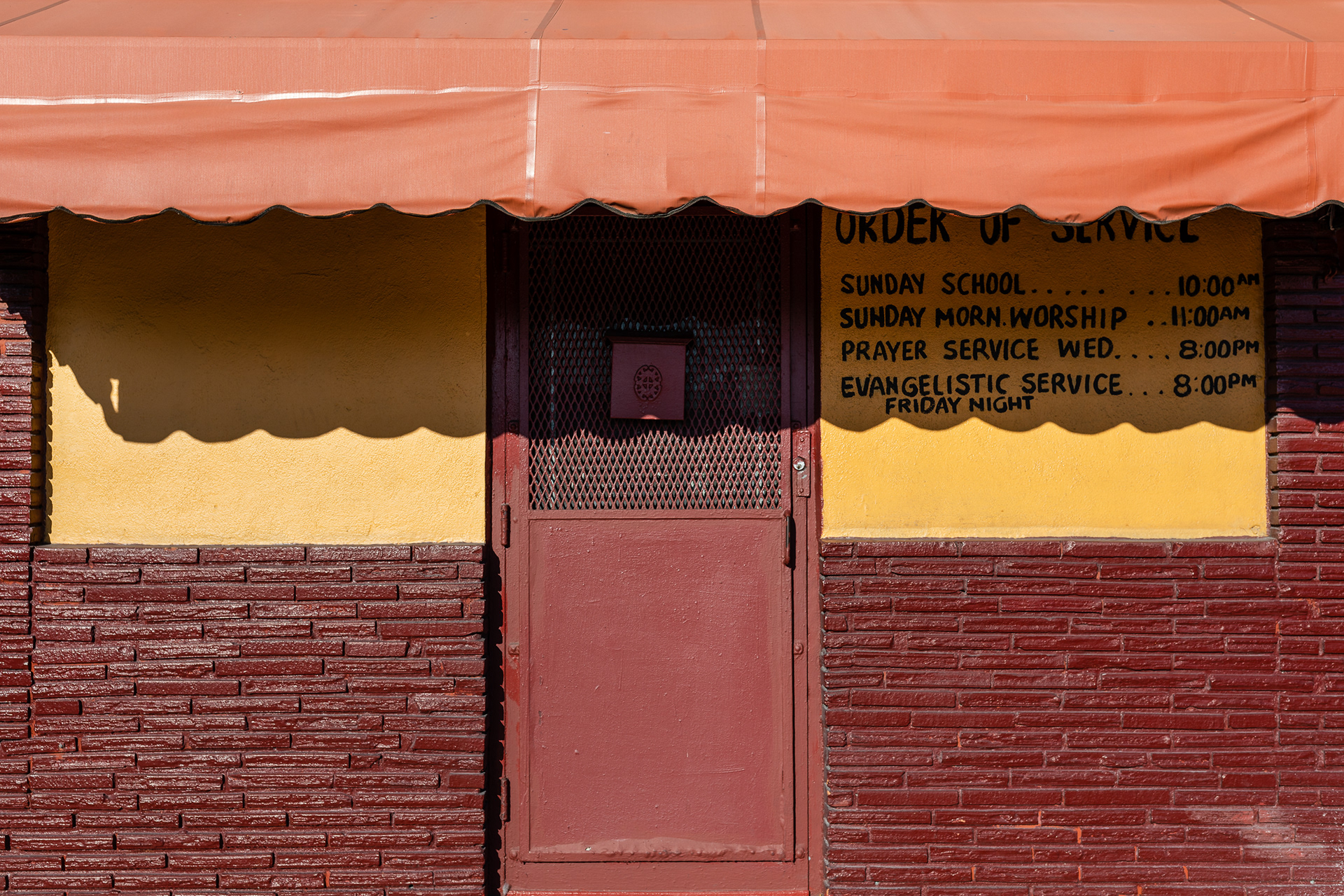
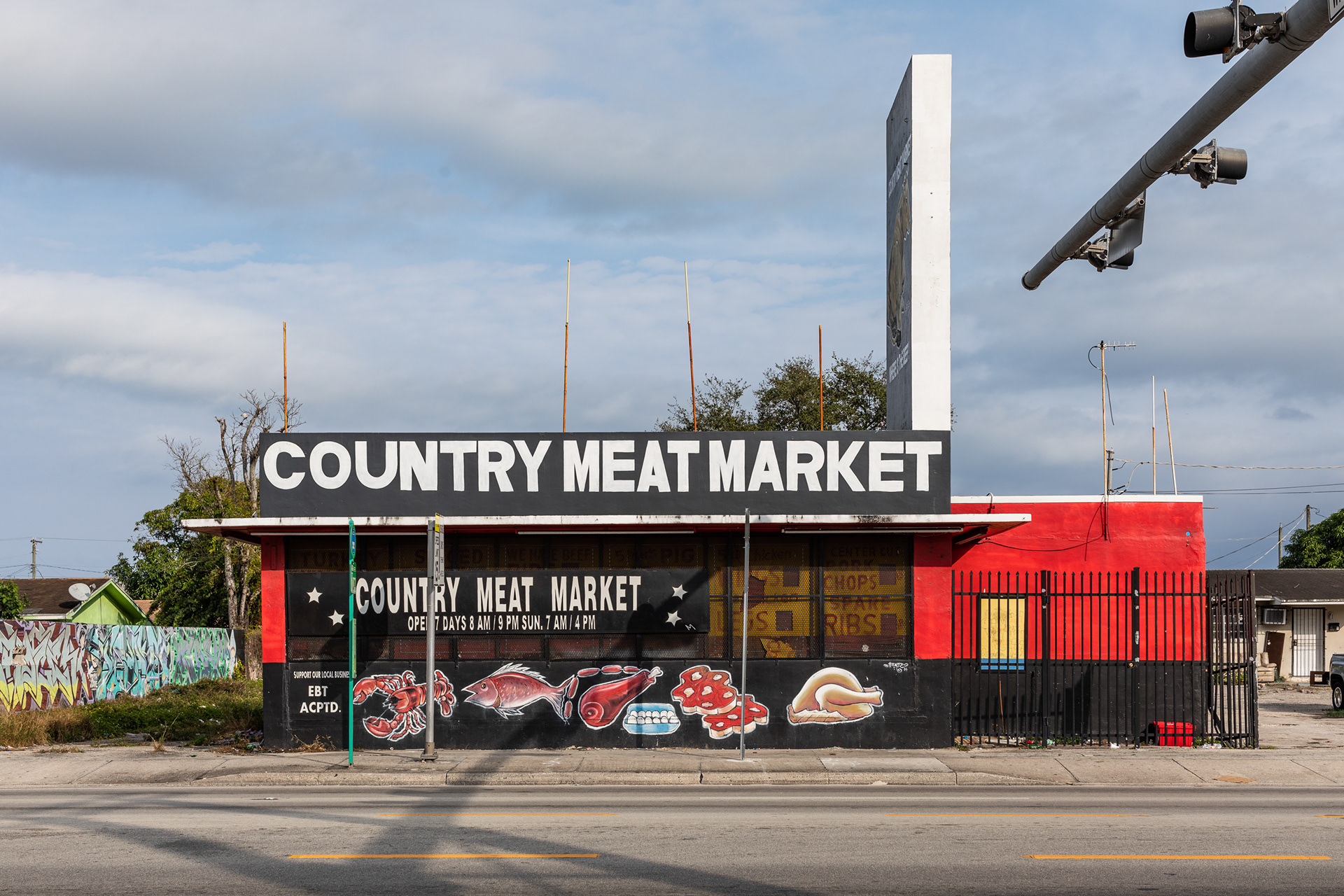
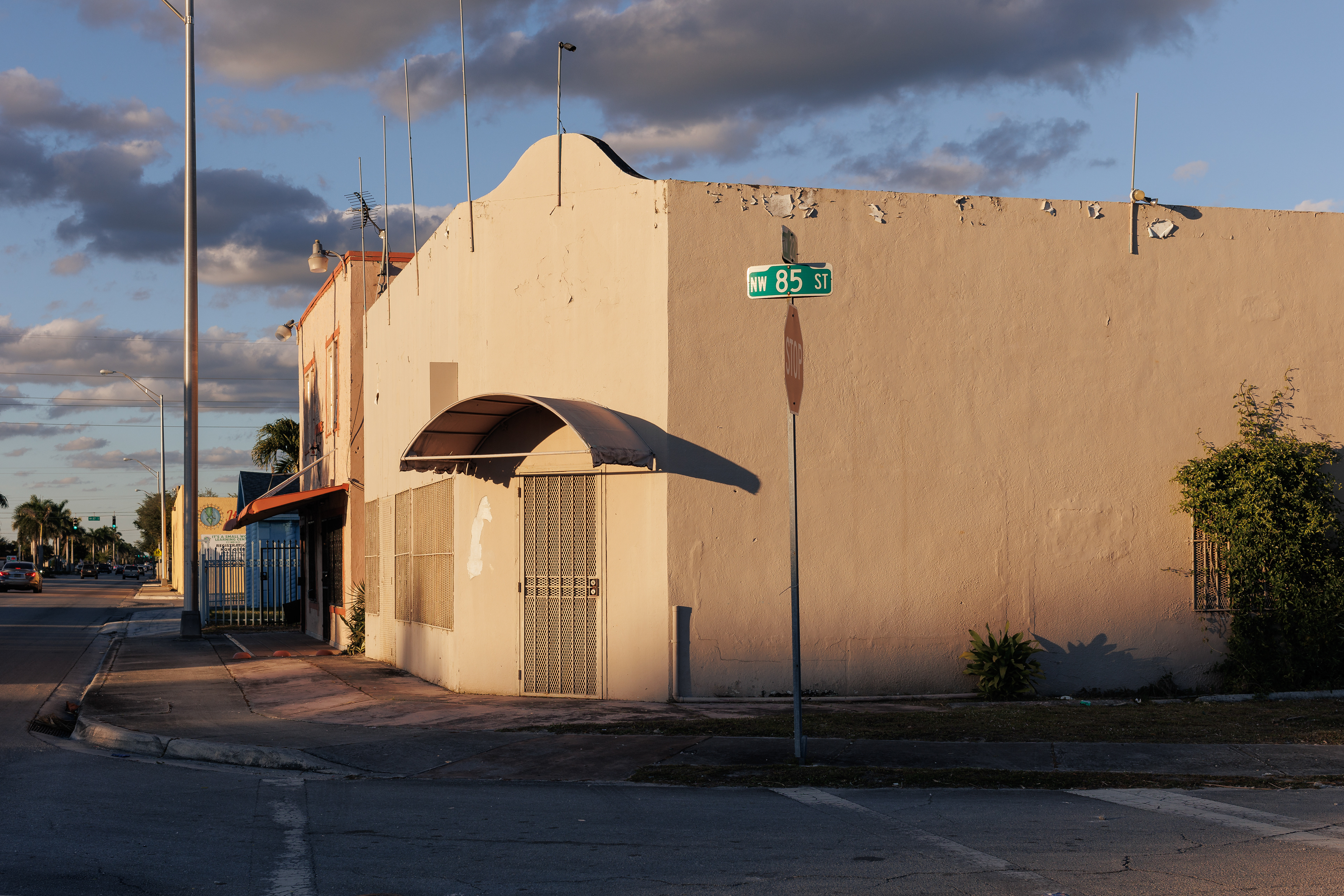
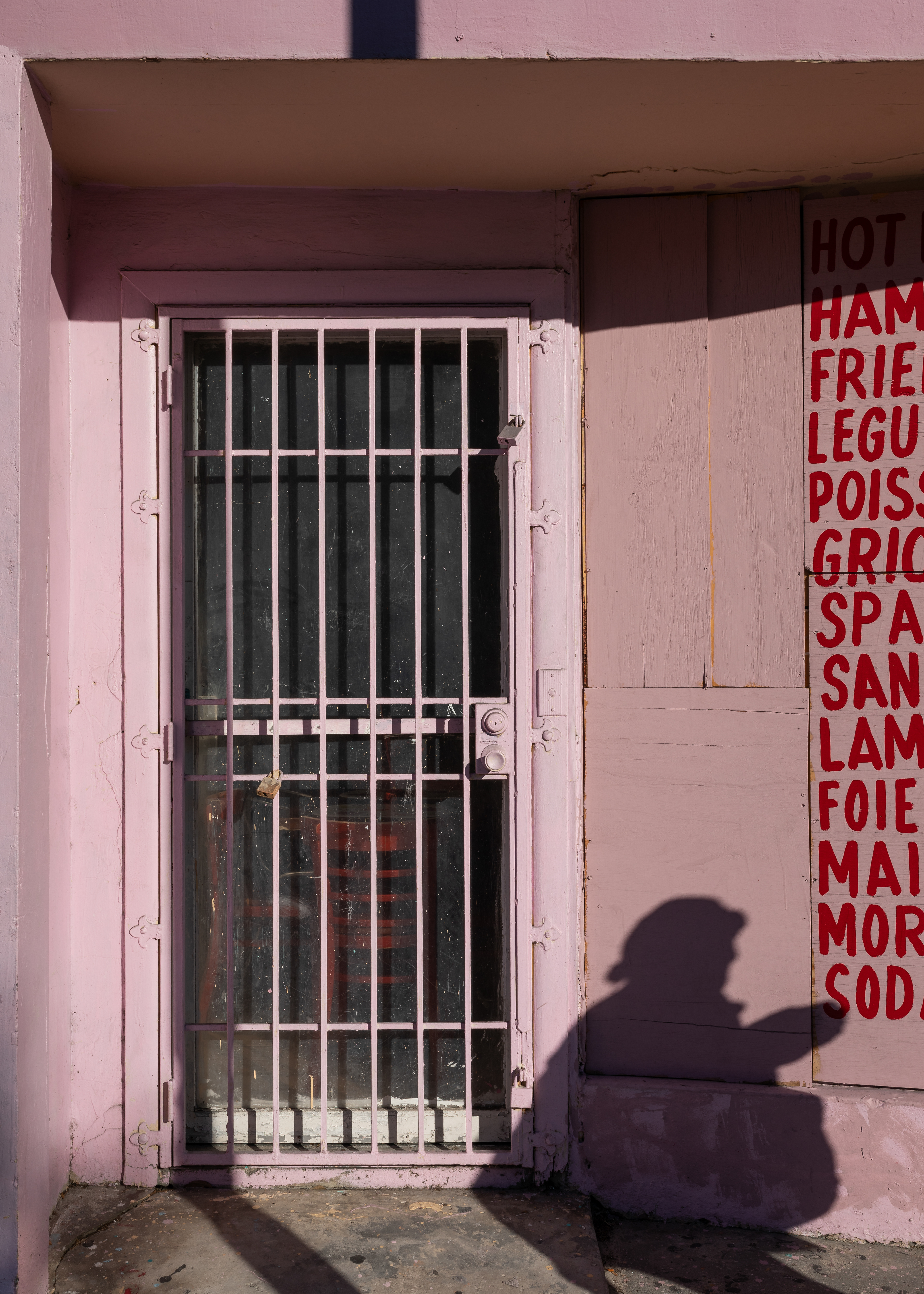
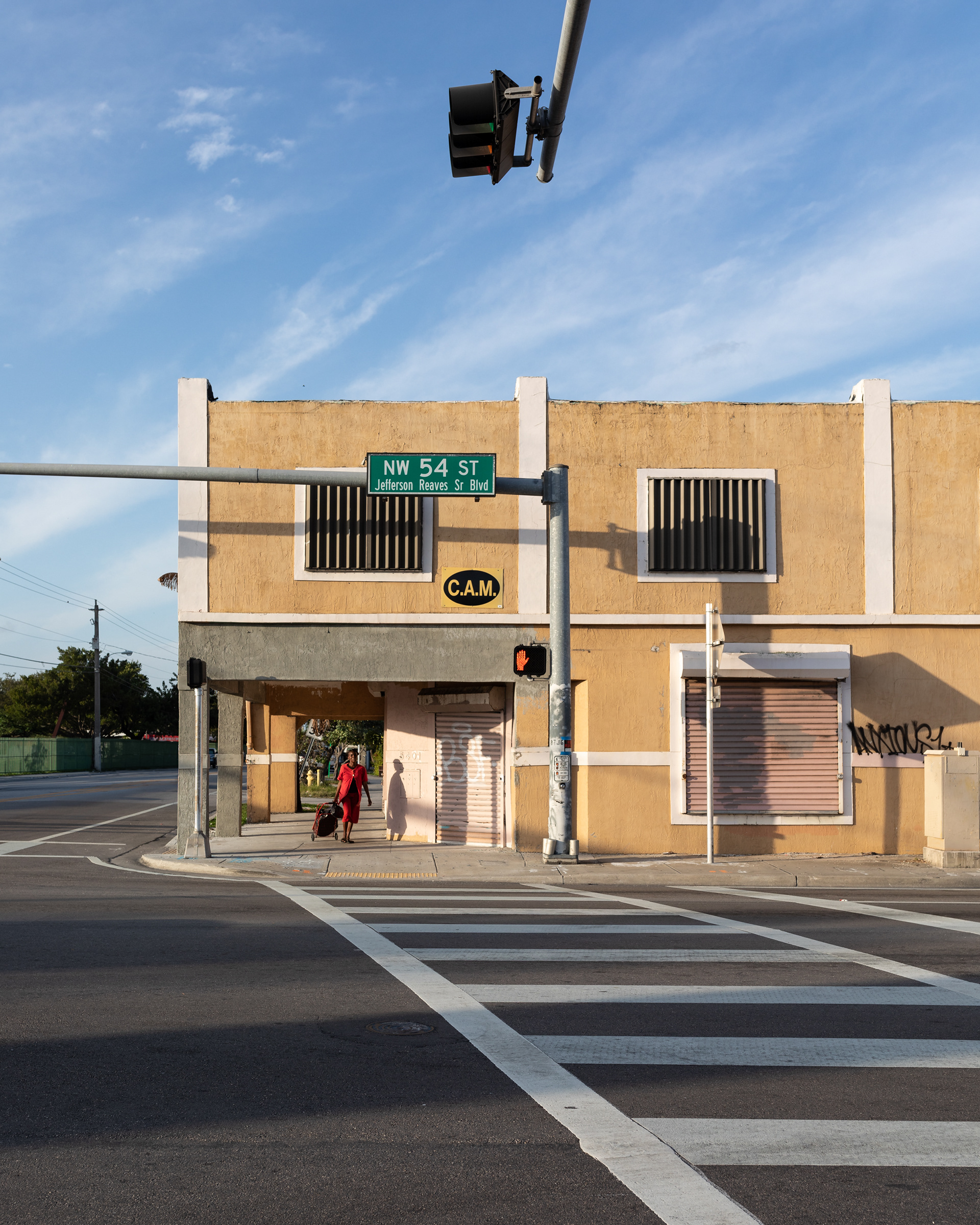
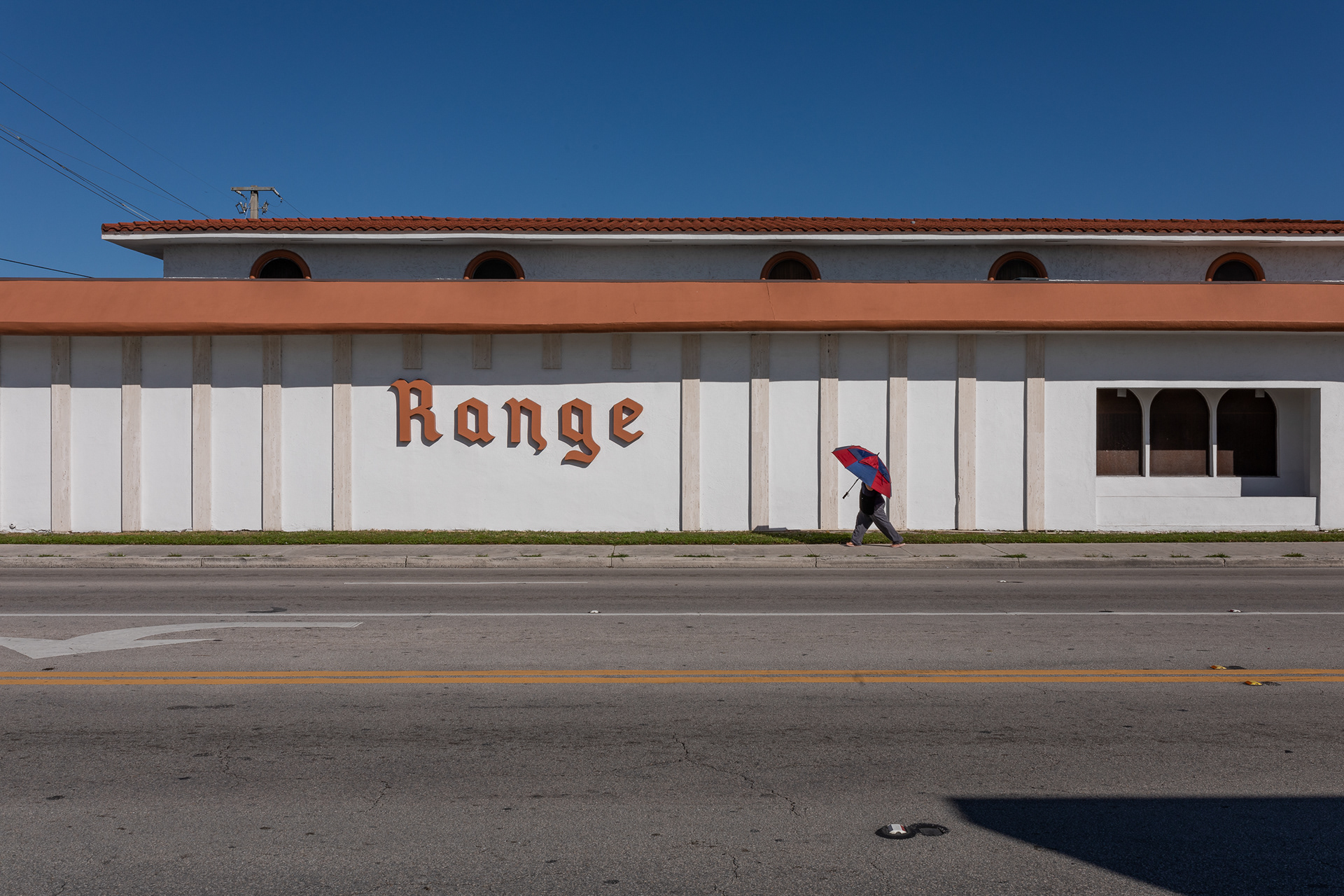
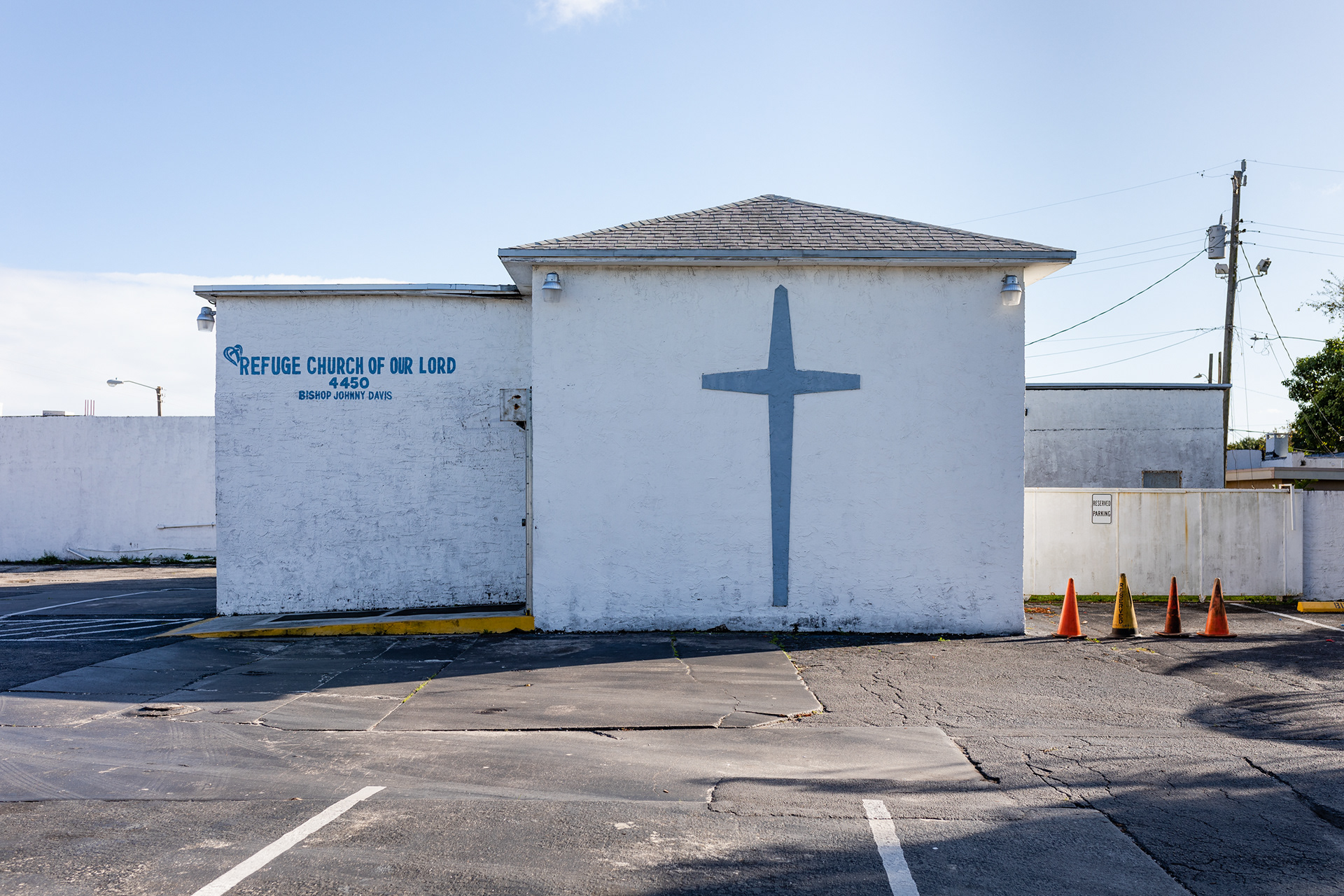
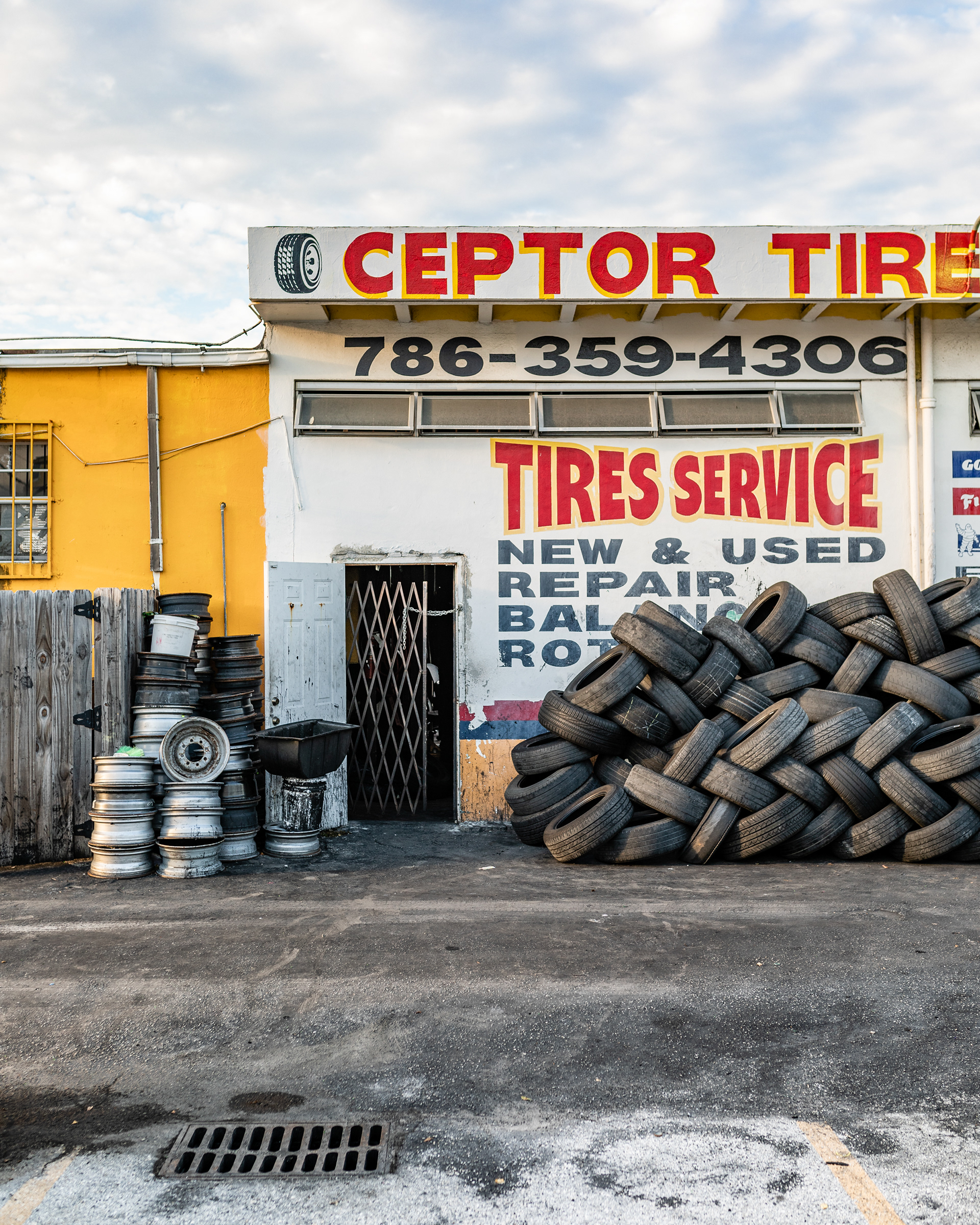
Miami is famous for its beaches, art deco, Miami Vice and the fiery cocaine wars of the 1980s. It is viewed as a tropical paradise, but the reality is it is unbearably hot ten months out of the year. The only major American city founded by a woman, Miami has faced environmental and social obstacles that have continually shifted the landscape and energy of the city. While the city originally grew around the railroad, it was later divided by highways and has continuously edged into the Everglades. Neighborhoods, which once flourished with small businesses on formerly pedestrian friendly streets, are now shuttered or limping along. The bright advertisements hand painted on the exterior walls and empty framed signs highlight the absence of what once was.
Slim concrete eyebrows still hover delicately, sometimes dangerously, over entrance doors, protecting people from the unending sun or the seasonal downpours. But the advent of air-conditioning made windows obsolete and as crime rates went up windows were imprisoned behind bars, painted over or enclosed entirely.
As technology changed and the neighborhoods evolved, so did the composition of the structure. Decades of harsh weather haven’t beaten down the latent vitality of these streets. What they once were and what they are now only adds to the layers of their story, stoically offering context through history and personality. The shifting histories are detailed, each visible like the layers of garish paint.